Senior Dog Mobility Problems: What’s Normal With Age and How to Help

If Your Senior Dog Is Slowing Down, This Is Normal — But You Can Improve It
If your dog is:
- Slipping on floors
- Taking longer to stand up
- Avoiding stairs or jumping
- Walking slower than before
This is a normal part of aging.
As dogs get older, their bodies naturally change:
- Joints lose flexibility
- Muscles weaken over time
- Balance and coordination decline
These changes don’t happen overnight — they build up gradually.
What matters is this:
👉 Even though mobility decline is normal, there is a lot you can do to make your dog more comfortable and prevent it from getting worse too quickly.
The Most Common Mobility Issues in Senior Dogs (And What They Mean)
1- Slipping on Floors (Loss of Stability With Age)
Why it happens in senior dogs:
- Reduced paw grip
- Slower reflexes
- Weak back legs
Smooth surfaces like tile or hardwood make this worse.
What you should do:
- Add rubber-backed non-slip mats
- Place them where your dog walks the most:
- feeding area
- hallways
- near sleeping space
Avoid:
- Thin rugs (they move and increase risk)
- Bare floors in high-traffic areas
2- Difficulty Standing Up (Joint Stiffness and Weakness)
Common causes in aging dogs:
- Joint wear (arthritis)
- Reduced joint lubrication
- Muscle loss over time
You’ll notice your dog taking longer to get up, especially after resting.
What helps immediately:
- Provide a firm, supportive sleeping surface
- Keep your dog warm (cold increases stiffness)
- Encourage gentle, frequent movement
3- Avoiding Stairs or Jumping (Pain Avoidance Behavior)
Senior dogs often stop doing things they used to do easily.
This is usually because:
- Movement causes discomfort
- Strength is reduced
- Joints are under stress
What to do:
- Eliminate unnecessary jumping
- Avoid stairs when possible
- Make access easier (lower effort, gradual movement)
Find the Mobility Problem Your Senior Dog Is Experiencing
Not all mobility problems look the same.
Some senior dogs stop jumping into the car. Others begin slipping on smooth floors, struggling to stand up, or avoiding stairs altogether.
Understanding the specific challenge your dog is facing is the first step toward helping them stay comfortable, confident, and active.
Explore the guides below to learn more about your dog’s symptoms and possible solutions.
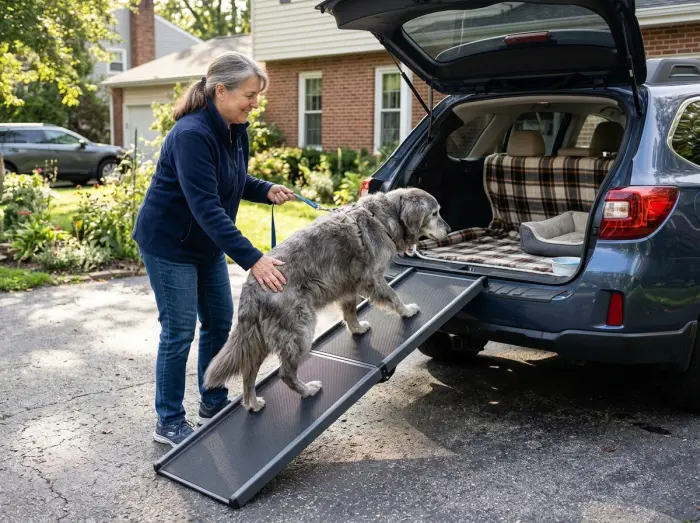
Senior Dog Can’t Get Into the Car
If your dog suddenly hesitates before getting into the car, refuses to jump, or needs assistance entering a vehicle, age-related mobility changes may be making the movement difficult.
This guide explains why it happens, what signs to watch for, and how to make car rides easier and safer.
Read the Complete Guide to Senior Dogs That Can’t Get Into the Car
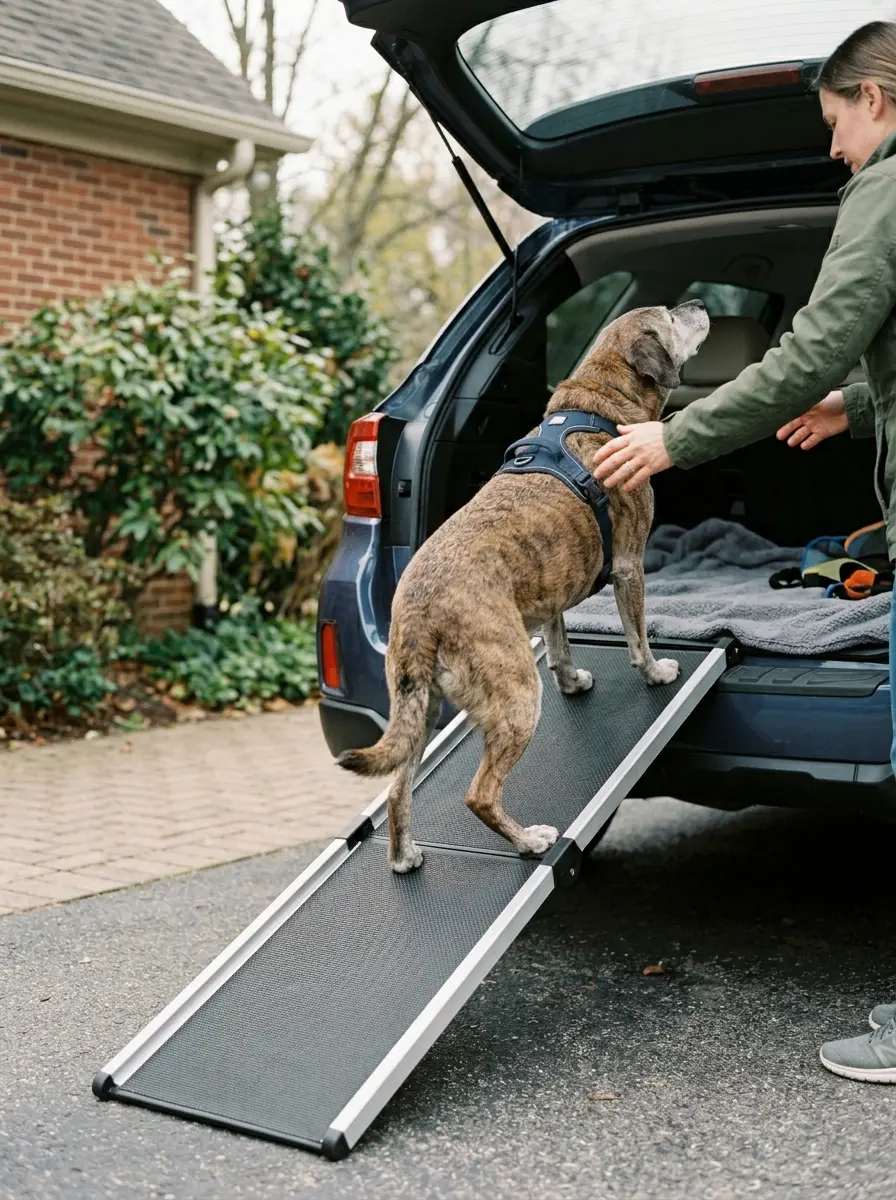
Senior Dog Can’t Use Stairs
Many older dogs begin avoiding stairs because climbing requires strength, balance, and joint flexibility.
Whether your dog hesitates, climbs slowly, or refuses stairs entirely, understanding the cause can help prevent further mobility decline.
Learn Why Senior Dogs Avoid Stairs
Discover the most common reasons senior dogs struggle with stairs
Dog Slips on Hardwood Floors
Slipping is one of the earliest signs of mobility decline in aging dogs.
Smooth surfaces can increase the risk of falls, injuries, and loss of confidence, especially in dogs with weak muscles or joint discomfort.
Discover How to Help a Dog That Slips on Floors
Senior Dog Struggles to Stand Up
If your dog takes longer to get up after resting, appears stiff, or needs several attempts to stand, this may indicate age-related mobility changes.
Early intervention can often improve comfort and independence.
Learn Why Senior Dogs Have Trouble Standing Up
Weak Hind Legs in Senior Dogs
Weakness in the rear legs is one of the most common concerns among owners of aging dogs.
It can affect balance, walking ability, stair use, and overall confidence.
This guide explains the most common causes and what owners can do to help.
Explore the Guide to Weak Hind Legs in Senior Dogs
Senior Dog Falls Frequently
Frequent falls should never be ignored.
While some loss of balance can occur with age, repeated falls may indicate more significant mobility challenges that require attention.
Learn what causes falls and how to reduce the risk of injury.
Read the Guide to Senior Dogs That Fall Frequently
Senior Dog Can’t Jump on Furniture
Many dogs stop jumping onto couches or beds long before mobility problems become obvious.
This behavior is often an early warning sign that movement has become uncomfortable or difficult.
Find Out Why Your Senior Dog Avoids Jumping on Furniture
Senior Dog Walking Problems
Changes in walking speed, posture, endurance, or coordination can reveal important clues about your dog’s mobility.
This guide covers the most common walking problems seen in senior dogs and how to support healthy movement.
Learn About Walking Problems in Senior Dogs
Mobility Problems Often Start Small
Many owners assume mobility decline happens suddenly.
In reality, most dogs show subtle signs for months before significant limitations appear.
The earlier you identify changes such as slipping, hesitation, weakness, or difficulty standing, the more opportunities you have to improve comfort and maintain independence.
Even small adjustments at home can make a meaningful difference.
Mobility and Joint Health Are Closely Connected
Most mobility issues are not isolated problems.
They are often linked to:
- Joint wear and tear
- Muscle loss
- Reduced flexibility
- Inflammation
- Age-related physical changes
Supporting mobility becomes much easier when joint health is addressed at the same time.
Continue to the Senior Dog Joint Health Guide
The 3 Most Effective Ways to Improve Mobility Right Now
You don’t need complicated routines. Focus on what actually makes a difference.
1. Improve Traction at Home
Most mobility issues become worse because of slippery floors.
Improving grip can:
- Reduce falls
- Increase confidence
- Help your dog move more naturally
👉 This is often the fastest improvement you’ll see.
2. Reduce Daily Joint Stress
Small changes make a big difference over time:
- Keep your dog at a healthy weight
- Avoid high-impact activity
- Replace long walks with shorter, consistent ones
Keep Your Dog Moving (Without Overdoing It)
Movement helps maintain:
- Muscle strength
- Joint flexibility
- Circulation
The key is consistency, not intensity.
When Mobility Problems Become Serious
Some signs indicate your dog needs professional evaluation:
- Refuses to stand
- Cries or shows pain when moving
- Limping
- Loss of balance
👉 At this point, it’s no longer just normal aging — it may require veterinary care.
Mobility Decline Is Closely Linked to Joint Health
Mobility problems don’t exist on their own.
They are usually connected to:
- Joint deterioration
- Inflammation
- Long-term wear
👉 If you don’t support joint health, mobility will continue to decline.
Next step:
👉 Improve joint support and reduce long-term damage
Read the complete guide to senior dog joint health
Quick Checklist: Is Your Senior Dog Losing Mobility?
- Slips on smooth floors
- Takes longer to stand up
- Moves less than before
- Avoids certain movements
- If you notice two or more:
👉 It’s time to start making changes now.
Mobility Senior Dogs Frequently Asked Questions
Yes. As dogs age, joint wear, muscle loss, and reduced balance naturally affect mobility.
Improving floor traction, reducing joint stress, and maintaining gentle daily movement are the most effective steps.
Most dogs begin to show signs around 7–10 years old, depending on breed and size.
Yes. Slipping is often one of the first signs of mobility decline and should be addressed early.